A canoe-based adventure, wilderness camping and August’s Perseid shower are my definition of an “all-inclusive”.
The canoe is among the best ways to penetrate into the deep forest. Across lakes and rivers, my paddle caresses the soft water, one stroke at a time. Cruising speed allows me to observe and soak up the surroundings. Meandering along, I meet a black bear taking a drink. A bit further on, we’re observed by a moose, the silent master of a mixed forest of fir and white birch. On foot, we sidestep a beaver dam and traverse the ancient land, looking for the next lake to show us the way. We have the canoe on our shoulders and are accompanied by a few black flies when an old spruce log road scrolls us through time as we travel kilometres before putting our watercraft back into the water.
There is a treasure trove of stories about the canoe. With their birchbark canoes, people of the First Nations travelled the rivers to return to their lands in winter, bringing with themall that they needed to survive and hunt. The men carried the canoes on their shoulders for several days while the women carried the provisions and other baggage. A bag made from animal skin and full of flour could not be allowed to get wet: on rainy days; patience was needed.
The men hunted, and preserving the meat was crucial. Nothing was wasted. Preservation with salt was one of the old methods.
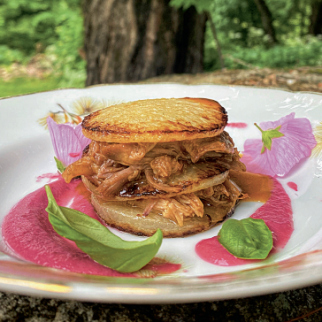
Gravlax made from bison meat on bannock bread is, for me, a good way to write a story in a plate. When camping, I cook the bannock on a tree branch; in the kitchen, a cast-iron pan provides good colour.
Telling stories helps us to remember. Taking my inspiration from the First Nations in choosing my ingredients makes sense of my path as a cook.